A day and a half late already, I've just moved on to the editing phase of this week's profile.
I'll pick up the process early tomorrow morning and look to wrap things up before noon.
Meanwhile, the week's news is the Edwards endorsement of Obama. Before I head off to bed I have three brief thoughts about the move:
1) Obama's campaign should rightfully be celebrating the support of Edwards, but Edwards' waiting until this late in the nomination process to chose a candidate is not necessarily a good thing. Some said this of Governor Richardson's endorsement a few months back, but deciding to endorse in May is by no means gutsy.
2) It is said that Edwards made the decision to back Obama following the West Virginia Primary because Edwards was worried the margin of Clinton's victory coupled with the perception that Obama is a weak candidate among working class white voters would damage his credibility and the Democratic party. My problem with this...if Obama really is weak among this demographic, shouldn't we acknowledge that fact instead of trying to mount a PR push to cover it up?
3) I have always admire John Edwards a great deal, and in covering Edwards in Des Moines on caucus day this past January I was never at a loss for good things to say about him and his campaign (read HERE and HERE). Presuming Obama is the Democratic nominee, Edwards deserves a cabinet position in recognition of his fight to end poverty in America, provide greater access to higher education for students in North Carolina, and for his tireless fight to provide health care for all Americans. Though Edwards' delay in endorsing Obama indicates that he may have simply been looking for a way into a Democratic administration, Obama and America would be lucky to have him.

Showing posts with label Endorsements. Show all posts
Showing posts with label Endorsements. Show all posts
Friday, May 16, 2008

Saturday, May 3, 2008
Where Cash Flows
There's a page on the Capitol Eye website that tracks donations to the political campaigns of the Democratic superdelegate (check out the site HERE).
The page is very factual and doesn't play sides beyond noting that Barack Obama's campaign has given 3 times as much money to superdelegates as Hillary Clinton has.
Perhaps the most interesting set of statistics has to do with superdelegates from Indiana and North Carolina—the sites of next week's two important primaries. I've compiled the data below:
North Carolina superdelegates:
Rep. Heath Shuler —
Obama campaign contributes $10,000
Clinton campaign contributes $0.
Indiana superdelegates
Rep. Baron Hill —
Obama campaign contributes $12,500
Clinton campaign contributes $2,500
[NOTE: Baron Hill has backed Barack Obama...wouldn't you?]
Rep. Brad Ellsworth —
Obama campaign contributes $10,000
Clinton campaign contributes $0
Rep. Joe Donnelly —
Obama campaign contributes $7,500
Clinton campaign contributes $0
—————————
We will have to wait and see how Shuler, Ellsworth, and Donnelly's superdelegate votes go, but the facts speak for themselves for the moment.
The page is very factual and doesn't play sides beyond noting that Barack Obama's campaign has given 3 times as much money to superdelegates as Hillary Clinton has.
Perhaps the most interesting set of statistics has to do with superdelegates from Indiana and North Carolina—the sites of next week's two important primaries. I've compiled the data below:
North Carolina superdelegates:
Rep. Heath Shuler —
Obama campaign contributes $10,000
Clinton campaign contributes $0.
Indiana superdelegates
Rep. Baron Hill —
Obama campaign contributes $12,500
Clinton campaign contributes $2,500
[NOTE: Baron Hill has backed Barack Obama...wouldn't you?]
Rep. Brad Ellsworth —
Obama campaign contributes $10,000
Clinton campaign contributes $0
Rep. Joe Donnelly —
Obama campaign contributes $7,500
Clinton campaign contributes $0
—————————
We will have to wait and see how Shuler, Ellsworth, and Donnelly's superdelegate votes go, but the facts speak for themselves for the moment.
Tuesday, February 26, 2008
Dodd Goes Obama
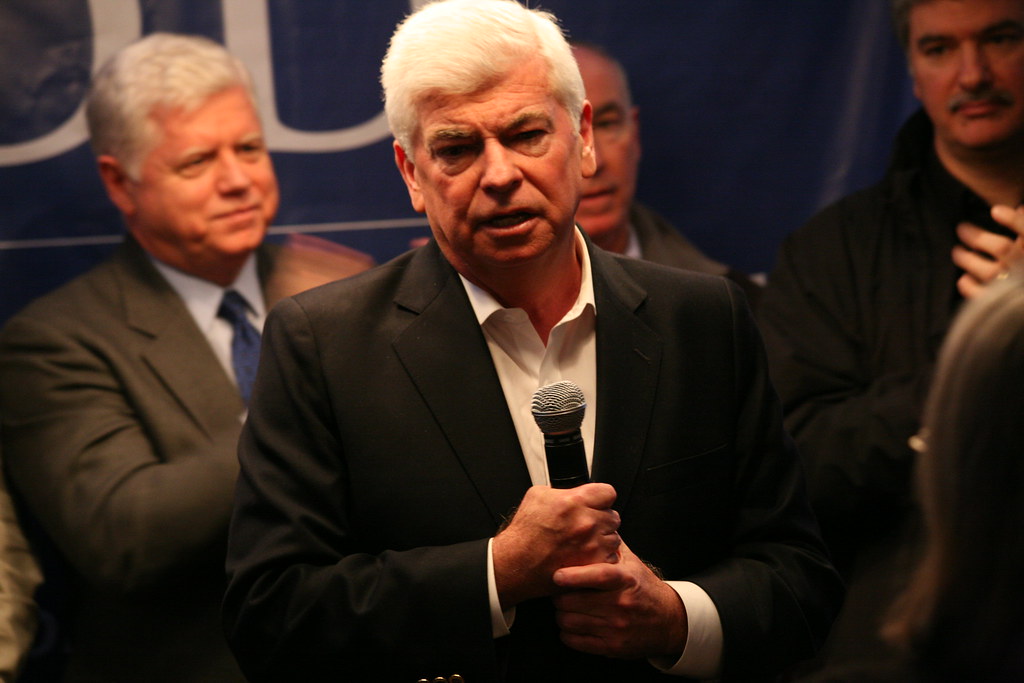
I got a supporter email this morning from Senator Dodd with "Barack Obama for President" in the subject. Of course I knew what the message was about, but I was surprised by the impression I was left with after reading through the entire letter.
Senator Dodd didn't say anything particularly new or eye-opening, but he didn't just repeat the Obama talking points in his endorsement as Ted Kennedy did last month. Instead, Dodd subtly applied a few of the key points from his own presidential campaign and spoke about how Obama possessed them too. Dodd touched on national service, the current economic crisis, and, as a clincher, argued that Democrats have to come together now around a nominee and prepare for the general election:
And while both of our Party's remaining candidates are extremely talented and would make excellent commanders-in-chief, I am throwing my support to the candidate who I believe will open the most eyes to our shared Democratic vision.
Put simply, I believe Barack Obama is uniquely qualified to help us face this housing crisis, create good jobs, strengthen America's families in this 21st century global economy, unite the world against terrorism and end the war in Iraq - and perhaps most importantly, call the American people to shared service and sacrifice.
That is why I believe the time has come for Democrats to come together as a Party and focus on winning the general election. The stakes are too high not to.
After Super Tuesday I was frustrated with what I read as the Obama campaign's attempt to claim victory in the nomination and subtly suggest Hillary abandon her run. Now I am starting to pick up on a nagging feeling that Ohio and Texas will and should be the final test for Senator Clinton; even if Hillary Clinton can win in Pennsylvania (which I think she can), I will start to resent her continuation of the battle with Obama. If Texas AND Ohio don't both pick up on whatever message the Clinton campaign has now, then it's over.
From a larger perspective it's rather unfortunate that such a tight election should be considered so close to finished by the end of February, but if moving on to the general election is the most important thing for the Democrats this election, then it's hard to make a case for dragging out the primary season any longer.
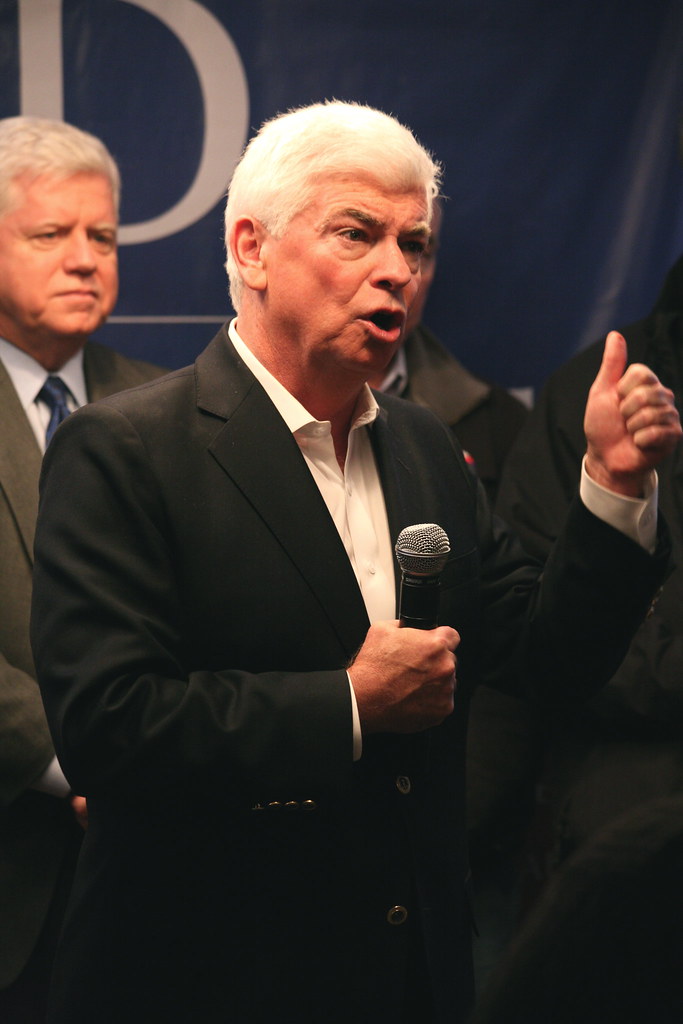
I would still rather see Hillary Clinton as the Democratic nominee and the next president, but Dodd's endorsement this morning is personal for me. Here's a guy whose campaign stood for ambitious environmental, national service, and educational initiatives, and whose recent career has been focused on restoring Constitution protections and opposing wiretapping and torture. In short, I respect him. With Dodd's endorsement today, I no longer feel a wide division between my political and personal beliefs and those of Obama.
People often discredit endorsements as having little potential to shape the way voters think, but Dodd's endorsement today speaks to me strongly, just as his candidacy did.
(all photos: © 2008 by Luke N. Vargas. All Rights Reserved.)
Wednesday, February 20, 2008
Chilling
It's the stuff that gives you goose-bumps, and it's a BIG problem for Democrats if this persists.
It's embarrassing to the party, it's embarrassing for Obama, and it's about the last time that State Sen. will ever make a public appearance for Obama.
In my last hurrah before I quiet down for a few days in preparation for my school's musical next week, I, like Chris Matthews, need to start hearing some substance. This is, after all, a race against one of the most experienced and well-respected Senators of the past few decades in the Republican party, not a conservative version of Obama who's only running on "hope" and "change."
Hold me back...
.
It's embarrassing to the party, it's embarrassing for Obama, and it's about the last time that State Sen. will ever make a public appearance for Obama.
In my last hurrah before I quiet down for a few days in preparation for my school's musical next week, I, like Chris Matthews, need to start hearing some substance. This is, after all, a race against one of the most experienced and well-respected Senators of the past few decades in the Republican party, not a conservative version of Obama who's only running on "hope" and "change."
Hold me back...
.
Sunday, February 3, 2008
Sunday, January 13, 2008
The Road We've Already Tread or Why One Woman Can Do it Better than Barack Obama or John McCain

Dodd's out. Biden's out. My two favorite Senators and presidential candidates are out of the race.
Meanwhile, February 5th, the day of the Massachusetts primary fast approaches and a number of questions run through my mind: Do I take experience over change? How much should I base my vote on Iraq war policies? Do I vote for a Republican or Democrat?
A lot of these questions aren't too hard to answer, or at least you'd think I would have answers to them given the amount of commentary I have posted on this site about the candidates and their proposed policies.
I wrote a post on New Years Eve reaffirming my support for Senator Chris Dodd. Being in Iowa only hours later broadened my perspective on the race for the Presidency, but arriving at what was the world capital of spin and political positioning nearly made me lose sight of what this election is about.

During the four hours of travel back to Boston last week I read Senator Joe Biden's book, Promises to Keep. Masterfully woven into his stories of growing up as a Catholic boy in the new suburb of Delaware are unforgettable messages of spirituality, purpose, and respect. Certain fragments of Biden's religious values and snippets of the principles his parents stood for and communicated to the young Biden still echo in my head.
Biden and Dodd are men whose words on the campaign trail never received the attention they deserved. Very few Americans ever heard Biden's chilling speeches on the Iraq War or Dodd's uplifting call to begin a new era of national service. Biden and Dodd's promises were promises to keep, and I trusted them more than anything. As happens in twenty-first century elections, however, the voices of knowledge and clarity of political vision were practically ignored. Instead, voters in Iowa cast off Biden and Dodd and opted for “change.”
As he recounts, Biden was urged to run for president by Democratic strategists in 1984, the year he delivered what's become one of his most famous speeches at the Democratic National Convention in Atlantic City. After giving his speech Biden wrote that, "I hadn't sufficiently appreciated how each person might hear something different from what I'd intended. After all, each person has a little something different buried in a broken heart. In Atlantic City on that day I could tell that people were moved to get up and stand with me."
Barack, anyone?

Public and party reaction to Biden's speech was tremendous. Biden resisted their pleas to run: "Why Run? To do what? I simply could not visualize myself running the bureaucracy of the federal government. I didn't think I knew enough about how the government functioned, and I wasn't sure I knew the people to call. Even after eleven years in the Senate, I didn't know and trust enough of the right people...By my own standards, I wasn't ready to be president."
Biden waited four years and announced his candidacy for the presidency in 1988. He was forty-two years old, and "after a decade on the Senate Foreign Relations Committee and nearly that long on the Senate Select Committee on Intelligence, I knew the world and America's place in it in a way few politicians did."
Despite his time as a community organizer in Chicago, that intimate knowledge of what it takes to be President cannot be said for Obama, forty-six years of age and only beginning his third year as a U.S. Senator.
And with intelligence committees and foreign relations I think of John McCain.

John McCain would prove a formidable opponent to any Democratic challenger in a general election. His experience and personal integrity are second to none. Throughout six years of a Republican presidency, McCain has consistently pointed out and fought for what he believes is in the best interest of this country and is not afraid to criticize those who stand in the way of the progress he feels is necessary even if they are from his own party. McCain has the guts that many only dream of, his heart is a compassionate one, and more than anyone he's taken hits for the things he's done throughout his career. He would be the perfect man for the job —except for his policies.
What makes McCain the wrong choice in 2008 is that he seeks to remedy the problems of Washington instead of the problems of America and its people.
On Iraq, McCain sees our invasion as being one conducted with too few troops—a failure of military judgment—not a moral wrongdoing. On health care, McCain sees problems in wasteful spending and the tax code, not in our shared responsibility of taking care of those who cannot care for themselves. On abortion, McCain sees problems of activist judges and the interpretation of the Constitution, not a woman's rights and personal decisions.
On experience, Senator McCain is the clear winner, but America needs more than a foreign policy tactician and a call to clean up Washington.
Midway through page 11 of his book, Biden recounts one of his mother's sayings: "You respect the habit, she used to say, you respect the vestments, you respect the uniform, but you do not not have to respect the person in it." Earlier, "they abuse their power, you bloody their nose."

In August of 1997 Hillary Clinton, then the First Lady, penned an editorial for the New York Times about the S-CHIP program she was urging the passage of, and that she is often credited with sparking the introduction of in the Senate. Clinton wrote:
"Even as we celebrate this progress, we should recognize that passage of a bill, no matter how historic, does not guarantee success. Whether this legislation fulfills its promise depends on how hard we are willing to work in the months ahead."
Clinton's nose was bloodied by Republicans when she presented universal health care coverage to America in 1994, and the failed proposal resulted in a Republican windfall in the midterm elections that year. But Clinton didn't stop. It was S-CHIP in 1997 and in 2008 it's universal health care. A month ago Clinton said in a speech, "I believe the way you get change is by working hard for it. Persistence, perseverance, even some perspiration - that is how you change lives, you change institutions." Hillary Clinton didn't give up in 1994, 1997 or 2007, and she's still going in 2008. In her words, "I think you actually learn more about people when they may not be successful than if they just slope through life. I had a choice: I could have said 'ok, we didn't do it, I'm not trying anymore.' Or, what I decided to do was to say 'ok, we didn't do it, let's regroup and see what we can get done.''

What separates Hillary Clinton from Barack Obama is that Obama, without the years of trying, failing, and regrouping, has consistently passed on the issues that require tough stands and only talks about the regrouping and changes that need to be made. On juvenile justice bills, on anti-abortion legislature, on important gun regulation bills, Barack Obama didn't get his nose bloodied because he "passed" and voted neither "yes" or "no" on over 100 pieces of legislation in the Illinois Senate. Obama's time in the United States Senate has not been much better, with Obama abstaining from voting on legislation designating the Iranian Guard as a terrorist organization and legislation condemning the liberal group MoveOn.org for comments made against General David Petraeus.
So far, Barack Obama hasn't stood for change or taken a stand on critical issues like abortion and gun control.
In racing up the stepladder of political success Obama has shouted the themes of his campaign without taking the time to prove that they are core beliefs he's capable of and willing to stand behind when the going gets tough. If he had made the difficult decisions, if he had taken the lead in the political arenas he promises to change as President, this opportunity would be his. What Obama needs is an extension—time to prove that he not only has the values we like to see in a leader but that he also has what it takes to lead—not a promotion to the Presidency.
For her experience, her willingness to fight and argue for what she believes in, and her strength to return to those who used her name as a punch-line in the past , I will vote for Hillary Clinton on February 5th.

(all photos: © 2008 by Luke N. Vargas. All Rights Reserved.)
Saturday, January 12, 2008
No Drumroll Necessary
I'm going to publish my candidate endorsement within the next day. My experience in Iowa has sunk in and the sleeplessness of Primary Night in New Hampshire is behind me.
Waiting.
Watching.
Writing.
Waiting.
Watching.
Writing.
Monday, December 31, 2007
Before Everything's Lost in the Rush

With a Mobile car mechanic inspecting my car on the way to New Hampshire, I settled down in one of four grease-stained folding chairs inside a stuffy and dark waiting room. A phone in my hand and the tantalizing closeness of a New Hampshire teeming with political excitement on my mind I made the call I had been meaning to make for a long time now.
I recently turned eighteen years old. Often a meaningful birthday for other reasons, I anticipated this milestone for the ability to donate money to a political campaign. Though unintentionally, I had donated money to Mike Huckabee and John McCain by purchasing t-shirts at various functions; now it was time for the real thing.
Opting to speak with someone directly instead of using a generic online or mail form, I 411'd the Washington D.C. headquarters for Senator Chris Dodd's presidential campaign. I held my debit card in my hand and read the number into the phone as quietly as I could. When prompted to chose a donation amount I doubled my intended contribution of $18 to $36.
I realized after the call ended that my contribution probably didn't have any effect on Dodd's campaign; surely his staff on the ground in Iowa and New Hampshire have the materials they need for canvassing over the next week, for signs to hold on caucus night and primary day, and I can't see my $36 going towards a new hiring or office opening.

My decision to give to Senator Dodd's campaign was rooted in my belief that my vote, my voice, and my support of the Senator is just as important in his eyes as everyone else's. With Hillary Clinton, Barack Obama, and John Edwards, the dreams they promise are as far from reality as the high-roller fundraisers they hold are from mainstream America. What the Dodd campaign represents is an America moving away from the stranglehold of foreign oil through bold but realistic initiatives, the return of the rule of law to the executive branch and the protection of the Constitution, and a new era of national service. Not only are Dodd's positions achievable, but they're initiatives already being undertaken by the Senator; from October to mid-December it was Dodd who singlehandedly led the fight against retroactive immunity for the telecom industry on the FISA bill.
After crossing the Massachusetts border into New Hampshire on Saturday, I decided to visit Senator Dodd's Manchester field office to pick up pamphlets on his efforts to introduce new legislation on the Iraq war in Congress this summer. I was greeted by a Dodd volunteer and mentioned to her my recent donation to the campaign, noting my skepticism that offering support so late in the game would be of any use. In the same personal tone that Senator Dodd extended the invitation to join his campaign as a volunteer this June, I was touched by the sincere gratitude my donation was welcomed with at the Manchester office and by the promise that my $36 would in fact be put right into distributing more yard signs throughout New Hampshire.
Surrounded by negative ads, newspaper attacks, and broken promises from our frontrunners, the act of voting and acting on conscious is more fulfilling than betting on the odds of victory and angling for an election win.
On caucus night in Iowa I'll make sure to check in on the festivities for Romney, Huckabee, Clinton and Obama, but at the end of the day I'll stand beside Chris Dodd.
It's Iowa time...let's go.
Monday, October 22, 2007
It's Over.

Chuck Norris endorsed Mike Huckabee today, end of story.
"When the boogeyman goes to sleep every night, he checks his closet for Chuck Norris."
Giuliani, Romney, and Thompson better start watching out for Huckabee too--this guy is no benchwarmer anymore.
Friday, August 31, 2007
A New Dodd

I spent the car-ride back from New Hampshire this morning trying to figure out how to write up this post. I started to absorb all of the things I had experienced in the past hour and thought about ways to distill it. I was tempted to elaborate on what it felt like to have goosebumps again at a campaign event (the last time that happened was a John Kerry rally in New Hampshire I attended only two days before the '04 election), or whether I should talk about the humbling feeling when you find yourself surrounded by hundreds of firefighters.

Just this Wednesday, two Boston firefighters--both veterans in the department-- were killed in an area fire. Warren Payne and Paul Cahill were remembered at the start of this morning's rally for Senator Chris Dodd in Manchester by a bagpipe rendition of "Amazing Grace" played by a firefighter's honor guard. A sea of firefighters wearing the IAFF's signature yellow t-shirts gathered silently to pay their respects This would be the first of many moments the crowd would gather in communion throughout the morning.

The IAFF's President, Harold Schaitberger, took to the platform and explained the union's rationale for endorsing Senator Dodd. Though Schaitberger's comments on the matter have been widely publicized--that Dodd was not picked to avoid confrontation with any of the top tier candidates--he again outlined that his organization looks beyond the polls and considers all candidates for their endorsement. Schaitberger reiterated that Chris Dodd is the closest ally of firefighters nationwide, and if he's only polling at 1% than they just have to work harder to put him in the lead.
I realized then that firefighters approach their job in a similar manner: thinking not which lives are worth saving easily and giving up after that, but instead committing themselves (and occasionally losing their lives) in a fight to do whatever they can to save anyone in danger.

It wasn't until Schaitberger's introduction of Chris Dodd, however, that I fully understood how important the backing of the IAFF will be for the Senator. In a cheer more often associated with a football game, Schaitberger rallied the crowd by asking if they would do whatever it takes to campaign for Dodd and not rest until the primary and beyond. In unison the firefighters responded with a resounding "hell yeah!"
After attending events for Hillary Clinton and Barack Obama in New Hampshire, I figured Chris Dodd would never preside over a large, electrified crowd. I was quickly proved wrong when Senator Dodd was welcomed onto the stage.

The Senator articulated what the IAFF's backing truly signifies by underscoring the amount of respect and heroism we associate with firefighters. Whether neighbors, friends, or little league baseball coaches, firefighters are perhaps the single most trusted individuals in any community. If I didn't have access to the news, was never phone banked by a candidate's staff, or never received piles of mail telling me who to vote for, I'm confident I would trust a firefighter to tell me who the best candidate was. It's that level of deference to the firefighter's profession that makes the IAFF endorsement so important for Dodd.

Though I consider myself well-versed on the policy positions of many presidential candidates, I know very little about what the candidates have done that affects firefighters and emergency workers.
In most cases, whenever a campaigning politician mentions or his or her legislative accomplishments or has their career summarized by someone else, audiences don't often get too excited. Even candidates addressing such groups as the NEA receive applause more out of general support for the candidate than for the details of the mentioned bill or proposal. When Chris Dodd's resume of protecting firefighters in his 26 years in the Senate was explained by Harold Schaitberger, however, the audience notably began nodding in anticipation and approval before the words "SAFER Act" (provided departments with the ability to hire more firefighters and thus prevent firefighters from entering dangerous situations with too little backup) and "FIRE Act" (a measure that has provided more than $3 billion for training and equipment upgrades across the country) were mentioned.
So little is communicated from the television screen; the emotions of a crowd are only palpable when you're there in person. Being surrounded by the mass of firefighters drove home the level of sincere agreement and respect for Dodd's bills that the audience felt.

I walked away from the rally this morning in awe. After seeing Chris Dodd on three prior occasions, I agreed with those who were critical of his often-bureaucratic manner of speech, but Dodd is markedly new man now: he's all fired up (pun intended). With a fresh haircut, a raspy voice (no doubt from two consecutive days of IAFF rallies), and a throng of cheering supporters, I can now visualize a different Chris Dodd. Where I previously saw little more than a Washington politician--a kind one, but far from charismatic--I now see Dodd as a candidate capable of both succeeding in his legislative role, but also someone with the spark to lead and inspire the people who hear him.
When I first met the Senator I asked him about youth involvement in politics and what needed to happen to empower younger generations. His answer touched upon a lot of points I can no longer remember, but his last sentence presented a personal challenge to me that no other candidate I've met has asked: "Support me in the primary--we need young people like you."

As Dodd accepted President John F Kennedy's call to national service by joining the Peace Corps, I'm proud to say I have taken up Chris Dodd's challenge to support him in the primary. I'll still cover every candidate and event that lands on the New Hampshire campaign schedule, but like the IAFF, I endorse Senator Chris Dodd.
(all photos: © 2007 by Luke N. Vargas. All Rights Reserved.)
Wednesday, August 29, 2007
A Reaffirming Moment

At a time when the election feels increasingly dominated by television spots, cheap pitches for money, and a never-ending stream of debates, it's nice to see America's unions starting to take sides. Though I'm not in a position to predict the long term impact of the recent endorsements by the United Transportation Union and the International Association of Firefighters for Senators Hillary Clinton and Chris Dodd respectively (though I know they're both bad signs for John Edwards' continuing viability as a candidate), I'm excited that after months of largely uneventful campaigning things are starting to get moving.
The International Association of Firefighters endorsed Senator John Kerry in September of 2003, and were quickly followed by endorsement decisions by the unions of Steelworkers, Teamsters, Food and Commercial Workers, Utility Workers, and the Laborers Union of North America.

Looking at past union endorsements and the eventual success of their picks may cause one to wonder what role these old-fashioned union endorsements play in a rapidly-changing election landscape. For instance, it was the generally-uninspiring Dick Gephardt who received the majority of union support in 2004 before a disappointing fourth place finish in the Iowa caucus. But it's what IAFF President Harold Schaitberger said about his union's endorsement of Chris Dodd that reaffirms the notion that unions are among the seemingly small group of voters that still understand the significance of a presidential election and don't just tag along with early winners in the polls: "We make decisions that in some people’s view are not conventional. Whatever the D.C. people need to say, so be it. This is for real for us.”
Is Dodd still a long shot? Yeah, but when long shots, especially ones with decades of Senate experience, get at least some of the attention they deserve it's something to celebrate.
If the pictures didn't give it away, it was Senator John Kerry's backing by the IAFF that many credit with his come from behind victories in New Hampshire and Iowa in 2004.
Subscribe to:
Posts (Atom)