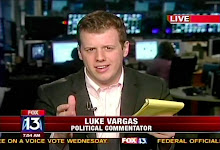
Did he just say money belongs IN politics, not out?!
You can attack McCain all you want from the convenience of your living room, but going up against the man with the momentum when you're losing won't get you anywhere.
Shaky, greying, and full of air.
America deserves better than Mitt Romney, and they're throwing him out.

Showing posts with label Debates. Show all posts
Showing posts with label Debates. Show all posts
Wednesday, January 30, 2008

Monday, January 21, 2008
Wow.
CNN's Democratic Debate live RIGHT NOW is hands-down the most earth-shattering event of the '08 campaign thus far.
Hillary = Smart attacks on Obama so far — present votes, health care plan— but it seems unnecessary, doesn't it? She's winning in the majority of February 5th states and had the momentum going into tonight.
Obama = Having his political record criticized publicly for the first time, and it could either hurt or help him. Obama can no longer claim a perfect political record and skip to how to implement things as President, but with Edwards and Hillary pushing on him so hard there's a chance that voters might sympathize with him tonight.
Edwards = Fantastic. Watch for a 5% jump in S.C. polls overnight.
Keep it up, Dems.
Hillary = Smart attacks on Obama so far — present votes, health care plan— but it seems unnecessary, doesn't it? She's winning in the majority of February 5th states and had the momentum going into tonight.
Obama = Having his political record criticized publicly for the first time, and it could either hurt or help him. Obama can no longer claim a perfect political record and skip to how to implement things as President, but with Edwards and Hillary pushing on him so hard there's a chance that voters might sympathize with him tonight.
Edwards = Fantastic. Watch for a 5% jump in S.C. polls overnight.
Keep it up, Dems.
Wednesday, January 16, 2008
One Comment
This from a reader on Politico.com reflecting on tonight's Democratic debate in Nevada says it all:
The Democrats, despite this whole race debate the past few days, are the party with vision: Clinton, Obama, Edwards, heck, even Kucinich and Gravel.
Unlike the Republican candidates, who seem focused on a single issue like illegal immigration or gun rights, each Democrat remaining stands for an America of tremendous change and promise.
Thank God for that.
"The big winner was the Democratic Party. Their spirit and vision shine so far above the Republicans."
The Democrats, despite this whole race debate the past few days, are the party with vision: Clinton, Obama, Edwards, heck, even Kucinich and Gravel.
Unlike the Republican candidates, who seem focused on a single issue like illegal immigration or gun rights, each Democrat remaining stands for an America of tremendous change and promise.
Thank God for that.
Sunday, September 9, 2007
The Scene
When I press the play button on my voice recorder and listen to the sounds of what's known as 'the spray,' I quickly turn down the volume. For the first few seconds, as a dozen photographers scrambe down the stairs from a press holding area towards the debate stage, the tape plays back in bangs and clatters. Equipment pushes against bodies and silent breathes become noisy. One photographer jokes and yells "dive! dive! dive!" as he jumps down the steps.
At the end of a bright concrete hallway is the darkened floor of the arena. We wait in the shadows under a makeshift television stage, hidden from the view of the crowd. With no warning an announcer's voice fills the room and begins introducing the debate participants. As the last name is read off and Brit Hume pauses for an ad break before the event begins a hand signal is made from halfway across the floor and the race begins. Our footsteps dampened by thick red carpeting, the photographers find the shortest route towards the base of the debate stage. Up the aisles and around the crowd, the looming wall of red, white, and blue seems to lean over us as we draw closer. Arriving there, however, the shiny jewels of the television set and the polished contestants are unimposing, personal, and imperfect.

We're told we have four minutes to take all the photos we can. Some of the photographers kneel down front and center, aiming to catch the head of a mayor or governor at the foot of the towering and colorful facade, while others set up tripods at stage left and catch each man lined up like dominos in matching suits and ties. I realized that every photo I would see in the morning's paper would be taken by someone within feet of me. The guy yelling "dive! dive! dive!" would have his shots in hundreds of papers from the Seattle Times to the Houston Chronicle, and it's likely I would wind up with a photo nearly identical to his. So took a photo of the photographers taking their photos, because I knew that would never be published.
It was oddly silent standing at the base of a television scene. Somehow, in the same room as thousands of students, noisy Ron Paul supporters, and millions of dollars of equipment, cameras, and lights there didn't seem to be any noise; I'm used to more noise coming from ten kids at the back of the high school auditorium. The silence is a blessing because it opens up a window into the movements and noises of the candidates on stage. As the photographers moved around and and angled for their shots I could clearly hear Mitt Romney whisper "time to suck it in, guys," and Duncan Hunter repeatedly saying "we've got a nice crowd here tonight," making the nerdy and obvious comments to himself that nobody responded to.

I lost track of time and didn't hear the press wranglers reminding us how long we had left until it was time to go. We all moved off to stage left and slipped behind the tall black curtain. I couldn't help but peer back behind me and see the stage lights brighten up a notch and the quirky individualism of each candidate turn to the polite and polished faces of the television. The security guard near us around stated firmly that there were to be no photos taken back stage and I faced forward again and marched towards the cement passageway. Cindy McCain leaned on her crutches to my left and gazed back towards the light of the stage.
It took a few minutes for the group of photographers to find its way back to the two hockey training rinks that comprised the spin room and blogger area; without a guide our knack for taking photos served us little in navigating through the intricacies of a place we weren't familiar with. A UNH student with some sort of yarn pullover and tangled hair took the lead and helped us back. He was holding a tiny Nikon Coolpix and was busy looking through his pictures. The guy from the AP looked at me and laughed when he saw the guy was wearing a press pass just like us, but I merely smiled back--though I may have had more equipment than my UNH counterpart, there's a pact between "new media" people that can't be broken--we're still bloggers and student journalists, and five years ago we never would have ended up on the floor of a Fox News Debate.

We pushed through an unmarked door and walked past some students on their way to the weight room before coming upon the converted hockey rinks again. The red carpet of the spin room glistened in the light of the empty television set, and a lonely maintenance worker walked around and made sure everything was working. I broke from the group and followed the plexiglass siding of the rink around the building towards the exit and went outside. To my left was a giant white trailer the size of an 18-wheeler with its supports embedded into the grass outside the arena. The trailer methodically whined as hidden engines supplied power through dozens of thick plastic tubes that snaked back into the building and into the laptops and battery chargers. Some Austrian journalists sat on the railing by the door and had a smoke while reviewing their footage, and I passed by them and up a dark stairway.
Just a little ways up was the main entrance to the arena. I walked through the last of the protesters and sign-holding supporters, all of us clueless as to what was being said inside or whose candidate was really standing out. What had been a noisy and raucous area of competing chants only an hour earlier was peaceful now. At the end of the long fence that had held the crowd back was a simple piece of folded plasterboard stretched out beneath a twisted tree. The two guys watching over it said it was the "Memorial Wall," an imitation of the stone monuments in Washington D.C. of fallen soldiers from decades past. A hundred yards from debating politicians inside an enclosed and vibrant sports hall was a solemn reminder of what should be the most important issue of debate. The first three years of names, about 3,700, were neatly painted on the gray board, with the most recent victims from Iraq printed out on computer paper and waiting to be painted later. One of the men said the woman who did the painting found the task so painful that she had to stop down for a while.

I headed back down the stairs and into the blogger room again, taking a seat in the very back row and spreading my equipment over the table. A number of people at the front of the room typed rapidly, glancing up the television monitors of the debates and summing up video with a few sentences of a blogger's words.
About an hour later I was tapped on the shoulder and told that the spray for the end of the debate was getting ready to leave. I packed up my gear and prepared myself for heading out onto the debate floor and obnoxiously taking a bunch of pictures of candidates I was gradually losing more and more interest in. Not once during my hour of rest in the middle of the debate did the blogger room ever audibly react to anything that was said on the television screens, and I was curious to see what would be spun into interesting news from all of it. The second spray in the arena was longer and less interesting than the first. Students tried to get autographs and pictures themselves, and I ended up trapped next to Brit Hume and Ann Romney on the questioners stage, wondering how long it'd be before I could head back to the spin room.

I had seen a few fashionable twenty-somethings with special VIP passes running past us on the way into the arena after the debate, and sure enough the spin room was packed with smooth talking representatives eager to let everyone know why their candidate really stood out. "Hannity and Colmes" was already live on tv, and Rudy Giuliani smiled under the bright spotlights that filled the room. John McCain entered through the back entrance of the television set and an assistant slipped an earpiece and transmitter onto him before he wandered over to the wing of the stage.

With the cameras rolling and the reporters talking the room started to bustle with activity. I found a step ladder and peered across the floor, locating the most congested areas, assuming there was someone interesting in front of the groups of reporters and cameramen there. Sam Brownback stood underneath an awning with his name on it and took questions from everybody with a pad of paper or a microphone. Each individual had their own reason for being there and a particular question that they wanted to ask, but watching all of it, the questions and answers lacked any coherence.

Some other candidates worked the crowd too, signing autographs and creating semicircles of press in front of them. One girl even managed to get a photograph with Duncan Hunter and said her dad would be so proud to see it. I found the "exciting and unpredictable" spin room to be the epitome of a messed up election process. So much was made of Fred Thompson's decision to skip the debate and his lack of respect for the New Hampshire way of campaigning, but I didn't see anything New Hampshire about manipulative men and women in suits working the television cameras either, and with every candidate going on Hannity and Colmes to explain why they were the clear winner, it seemed just as much an advertisement as Thompson's 30-second spot.

I spent another few minutes taking photos and saying hello to some of the campaign staffers that I knew before heading out to my car. I popped in an old CD instead of listening to talk radio, and drove the two hours back to Boston. It was 3:00 A.M. before I finally went to sleep, but I slept excited to go back to school and my US Government class. Perhaps fifty minutes of Plato, Machiavelli, and history could enlighten me more than ten hours at a debate.
(all photos: © 2007 by Luke N. Vargas. All Rights Reserved.)
At the end of a bright concrete hallway is the darkened floor of the arena. We wait in the shadows under a makeshift television stage, hidden from the view of the crowd. With no warning an announcer's voice fills the room and begins introducing the debate participants. As the last name is read off and Brit Hume pauses for an ad break before the event begins a hand signal is made from halfway across the floor and the race begins. Our footsteps dampened by thick red carpeting, the photographers find the shortest route towards the base of the debate stage. Up the aisles and around the crowd, the looming wall of red, white, and blue seems to lean over us as we draw closer. Arriving there, however, the shiny jewels of the television set and the polished contestants are unimposing, personal, and imperfect.

We're told we have four minutes to take all the photos we can. Some of the photographers kneel down front and center, aiming to catch the head of a mayor or governor at the foot of the towering and colorful facade, while others set up tripods at stage left and catch each man lined up like dominos in matching suits and ties. I realized that every photo I would see in the morning's paper would be taken by someone within feet of me. The guy yelling "dive! dive! dive!" would have his shots in hundreds of papers from the Seattle Times to the Houston Chronicle, and it's likely I would wind up with a photo nearly identical to his. So took a photo of the photographers taking their photos, because I knew that would never be published.
It was oddly silent standing at the base of a television scene. Somehow, in the same room as thousands of students, noisy Ron Paul supporters, and millions of dollars of equipment, cameras, and lights there didn't seem to be any noise; I'm used to more noise coming from ten kids at the back of the high school auditorium. The silence is a blessing because it opens up a window into the movements and noises of the candidates on stage. As the photographers moved around and and angled for their shots I could clearly hear Mitt Romney whisper "time to suck it in, guys," and Duncan Hunter repeatedly saying "we've got a nice crowd here tonight," making the nerdy and obvious comments to himself that nobody responded to.

I lost track of time and didn't hear the press wranglers reminding us how long we had left until it was time to go. We all moved off to stage left and slipped behind the tall black curtain. I couldn't help but peer back behind me and see the stage lights brighten up a notch and the quirky individualism of each candidate turn to the polite and polished faces of the television. The security guard near us around stated firmly that there were to be no photos taken back stage and I faced forward again and marched towards the cement passageway. Cindy McCain leaned on her crutches to my left and gazed back towards the light of the stage.
It took a few minutes for the group of photographers to find its way back to the two hockey training rinks that comprised the spin room and blogger area; without a guide our knack for taking photos served us little in navigating through the intricacies of a place we weren't familiar with. A UNH student with some sort of yarn pullover and tangled hair took the lead and helped us back. He was holding a tiny Nikon Coolpix and was busy looking through his pictures. The guy from the AP looked at me and laughed when he saw the guy was wearing a press pass just like us, but I merely smiled back--though I may have had more equipment than my UNH counterpart, there's a pact between "new media" people that can't be broken--we're still bloggers and student journalists, and five years ago we never would have ended up on the floor of a Fox News Debate.

We pushed through an unmarked door and walked past some students on their way to the weight room before coming upon the converted hockey rinks again. The red carpet of the spin room glistened in the light of the empty television set, and a lonely maintenance worker walked around and made sure everything was working. I broke from the group and followed the plexiglass siding of the rink around the building towards the exit and went outside. To my left was a giant white trailer the size of an 18-wheeler with its supports embedded into the grass outside the arena. The trailer methodically whined as hidden engines supplied power through dozens of thick plastic tubes that snaked back into the building and into the laptops and battery chargers. Some Austrian journalists sat on the railing by the door and had a smoke while reviewing their footage, and I passed by them and up a dark stairway.
Just a little ways up was the main entrance to the arena. I walked through the last of the protesters and sign-holding supporters, all of us clueless as to what was being said inside or whose candidate was really standing out. What had been a noisy and raucous area of competing chants only an hour earlier was peaceful now. At the end of the long fence that had held the crowd back was a simple piece of folded plasterboard stretched out beneath a twisted tree. The two guys watching over it said it was the "Memorial Wall," an imitation of the stone monuments in Washington D.C. of fallen soldiers from decades past. A hundred yards from debating politicians inside an enclosed and vibrant sports hall was a solemn reminder of what should be the most important issue of debate. The first three years of names, about 3,700, were neatly painted on the gray board, with the most recent victims from Iraq printed out on computer paper and waiting to be painted later. One of the men said the woman who did the painting found the task so painful that she had to stop down for a while.

I headed back down the stairs and into the blogger room again, taking a seat in the very back row and spreading my equipment over the table. A number of people at the front of the room typed rapidly, glancing up the television monitors of the debates and summing up video with a few sentences of a blogger's words.
About an hour later I was tapped on the shoulder and told that the spray for the end of the debate was getting ready to leave. I packed up my gear and prepared myself for heading out onto the debate floor and obnoxiously taking a bunch of pictures of candidates I was gradually losing more and more interest in. Not once during my hour of rest in the middle of the debate did the blogger room ever audibly react to anything that was said on the television screens, and I was curious to see what would be spun into interesting news from all of it. The second spray in the arena was longer and less interesting than the first. Students tried to get autographs and pictures themselves, and I ended up trapped next to Brit Hume and Ann Romney on the questioners stage, wondering how long it'd be before I could head back to the spin room.

I had seen a few fashionable twenty-somethings with special VIP passes running past us on the way into the arena after the debate, and sure enough the spin room was packed with smooth talking representatives eager to let everyone know why their candidate really stood out. "Hannity and Colmes" was already live on tv, and Rudy Giuliani smiled under the bright spotlights that filled the room. John McCain entered through the back entrance of the television set and an assistant slipped an earpiece and transmitter onto him before he wandered over to the wing of the stage.

With the cameras rolling and the reporters talking the room started to bustle with activity. I found a step ladder and peered across the floor, locating the most congested areas, assuming there was someone interesting in front of the groups of reporters and cameramen there. Sam Brownback stood underneath an awning with his name on it and took questions from everybody with a pad of paper or a microphone. Each individual had their own reason for being there and a particular question that they wanted to ask, but watching all of it, the questions and answers lacked any coherence.

Some other candidates worked the crowd too, signing autographs and creating semicircles of press in front of them. One girl even managed to get a photograph with Duncan Hunter and said her dad would be so proud to see it. I found the "exciting and unpredictable" spin room to be the epitome of a messed up election process. So much was made of Fred Thompson's decision to skip the debate and his lack of respect for the New Hampshire way of campaigning, but I didn't see anything New Hampshire about manipulative men and women in suits working the television cameras either, and with every candidate going on Hannity and Colmes to explain why they were the clear winner, it seemed just as much an advertisement as Thompson's 30-second spot.

I spent another few minutes taking photos and saying hello to some of the campaign staffers that I knew before heading out to my car. I popped in an old CD instead of listening to talk radio, and drove the two hours back to Boston. It was 3:00 A.M. before I finally went to sleep, but I slept excited to go back to school and my US Government class. Perhaps fifty minutes of Plato, Machiavelli, and history could enlighten me more than ten hours at a debate.
(all photos: © 2007 by Luke N. Vargas. All Rights Reserved.)
Thursday, September 6, 2007
It's Late
but I couldn't help but posting some photos.

(all photos: © 2007 by Luke N. Vargas. All Rights Reserved.)

(all photos: © 2007 by Luke N. Vargas. All Rights Reserved.)
Wednesday, September 5, 2007
Closing In
My cameras are charged and all systems are go for UNH's GOP Debate tonight at 9 P.M., and while I won't have time tonight to post any pictures or write anything up, expect a handful of posts starting Thursday afternoon.
Thursday, August 30, 2007
One Week Away

Should you expect a photo like the one above on this site a week from today? The answer is yes. Why? Well, I've been officially credentialed as a member of the press for the University of New Hampshire's GOP Presidential Debate on September 5th.
I often pretend to be unexcited by the buzz at big campaign events--most of them are just the same routine over and over again just with different people in different places--but a presidential debate is a big deal for someone like me, and I can hardly contain my excitement.
Being a part of the debate will be quite an experience in itself, but it's the access to the spin room that I'm looking forward to most. I've taken pictures alongside the AP, LA Times, and ABC News, but the spin room will be home to the Fox News live broadcast and hundreds of other journalists and photographers.
I can't wait to jockey for position with them...
Wednesday, August 15, 2007
House Cleaning
You know things are going from bad to worse when your own website's discussion board contains the following quotes all on the same page:
Who are they talking about? None other than Bill Richardson, Governor of New Mexico.
The comments came in response to Richardson's performance at the HRC Forum, an almost-debate that focused on issues important to the gay community.
It seems that Richardson not only fumbled some of his answers during the forum, and, as one message poster on Richardson's site said, "...he seemed to be walking on egg shells, like he was trying too hard. He looked like anything but a leader," but his campaign's response the next morning attempting to clarify the Governor's statements received low marks as well. Some called it a reversal instead of a clarification. Others said the clarification was no better than the double-talk in Washington.
I can't say I've completely throw in the towel on Richardson, but unless his campaign pulls a 180 on us and starts making some real progress, the Governor is going nowhere but down--fast.
"It seems __________ has a lot of problems answering questions of any type in debates, every debate we've had so far he's had problems understanding questions etc. If we want to beat a republican, we have to have someone who isn't going to look weak and pathetic in a debate and appear that he doesn't know what he's talking about. Therefore I officially withdraw my support for ___________."
"If I don't see some kind of turn around in _______ campaign, I'm considering withdrawing my support too."
"We need a strong leader in the White House. At this point, I'm sorry to say I can no longer see my self supporting _________. He lost me :-("
Who are they talking about? None other than Bill Richardson, Governor of New Mexico.
The comments came in response to Richardson's performance at the HRC Forum, an almost-debate that focused on issues important to the gay community.
It seems that Richardson not only fumbled some of his answers during the forum, and, as one message poster on Richardson's site said, "...he seemed to be walking on egg shells, like he was trying too hard. He looked like anything but a leader," but his campaign's response the next morning attempting to clarify the Governor's statements received low marks as well. Some called it a reversal instead of a clarification. Others said the clarification was no better than the double-talk in Washington.
I can't say I've completely throw in the towel on Richardson, but unless his campaign pulls a 180 on us and starts making some real progress, the Governor is going nowhere but down--fast.
Tuesday, July 24, 2007
Changing Gears
Tonight's debate was not as revolutionary or record-breaking as CNN likes to make it seem, but it did seem to mark a new period in the months leading up to primary season. Previous debates have seen a rush by the press and many voters to identify winners. Now, after a few rounds of no real movement, things are starting to change as real losers--the second tier candidates who still can't break out of their anonymity--are being slowly left behind. I'll take two candidates as examples here to show what's changing.
It's hard to say what the long-term reason behind these changes we're seeing now is. One explanation is that voters are picking up on smart energy: the ability to passionately speak about your position on an issue--even if it's not the best position. Chris Dodd might win an election on paper, but he's not doing enough to get us inspired enough to read about them at his website. Don't be surprised, however, if Joe Biden sees a surge in online donations, a small increase in media coverage, and it's not unrealistic to predict that he could start to move up a bit in the polls.
There's a cushion that people like someone like Hillary Clinton enjoys; she doesn't have to worry about the endlessly annoying "thank yous" she gives to anybody that asks her a question or does anything immediately before her. The same luxury doesn't exist for someone like Chris Dodd or Joe Biden because Hillary Clinton can count on waking up tomorrow with 40% of all Democrats supporting her.
It's that 5-10% undecided vote right now that is looking for an energized candidate that they think has a shot of making a mark on things. And to give him credit for the way he's handling himself, Joe Biden IS that passionate, sensible, experienced candidate that seems to show the hope of having some election-class mobility that makes me start to like him more and more.
All in all, it may not have been the element of YouTube that did the trick tonight, but we're finally seeing some changes in this election. To me, I'll sacrifice two hours of my time to see it unfold on CNN.
Chris Dodd
Here's a guy with experience and some great ideas that addressed a number of the issues raised in tonight's debate. Save perhaps his brief mention of his national service plan, Dodd failed to break from the rambling oration that he's so used to and get down to talking about the things that make him strongest. I was sadly unimpressed by his ability to articulate the plans I know he has for the environment, the Iraq war, and health care. Post-debate surveys show that 3% of viewers believed Dodd won tonight's debate (the lowest of all candidates), and 12% believed he lost (the second highest behind Mike Gravel). Dodd's campaign has changed a lot since the first debates--he's brought on some new advisors, picked up some endorsements, hit the trail in Iowa and New Hampshire as hard as anyone--but when it comes time to make a name for himself on the national stage nothing seems to happen.
Joe Biden
Polling only one or two percentage higher than Chris Dodd going into today was Delaware Senator Joe Biden. Biden has had difficulty establishing himself on the national stage in the past few months as well. There was a different energy in the air tonight because of the new debate format, and Joe Biden adjusted, and succeeded as a result. People saw his strong and no-nonsense speaking style and his ability to address the point on hand. At times he even responded in a quiet, emotional manner when appropriate. And what did viewers think? 14% said he won--putting him only 1% lower than Barack Obama and higher than Senator Edwards.
It's hard to say what the long-term reason behind these changes we're seeing now is. One explanation is that voters are picking up on smart energy: the ability to passionately speak about your position on an issue--even if it's not the best position. Chris Dodd might win an election on paper, but he's not doing enough to get us inspired enough to read about them at his website. Don't be surprised, however, if Joe Biden sees a surge in online donations, a small increase in media coverage, and it's not unrealistic to predict that he could start to move up a bit in the polls.
There's a cushion that people like someone like Hillary Clinton enjoys; she doesn't have to worry about the endlessly annoying "thank yous" she gives to anybody that asks her a question or does anything immediately before her. The same luxury doesn't exist for someone like Chris Dodd or Joe Biden because Hillary Clinton can count on waking up tomorrow with 40% of all Democrats supporting her.
It's that 5-10% undecided vote right now that is looking for an energized candidate that they think has a shot of making a mark on things. And to give him credit for the way he's handling himself, Joe Biden IS that passionate, sensible, experienced candidate that seems to show the hope of having some election-class mobility that makes me start to like him more and more.
All in all, it may not have been the element of YouTube that did the trick tonight, but we're finally seeing some changes in this election. To me, I'll sacrifice two hours of my time to see it unfold on CNN.
Subscribe to:
Posts (Atom)